

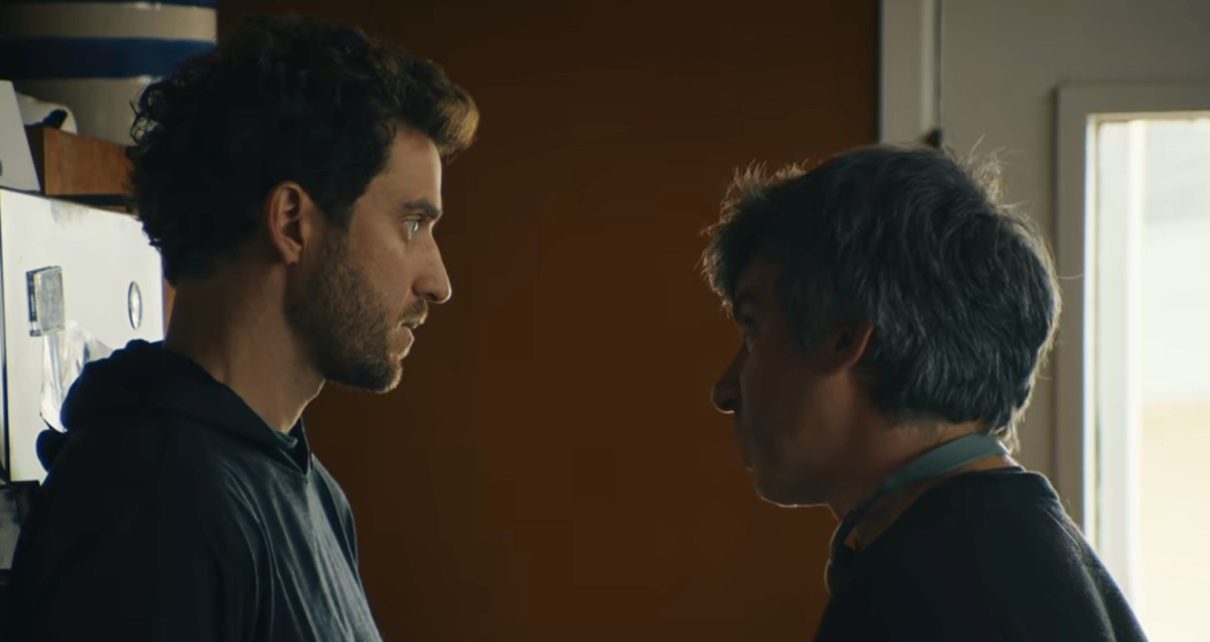
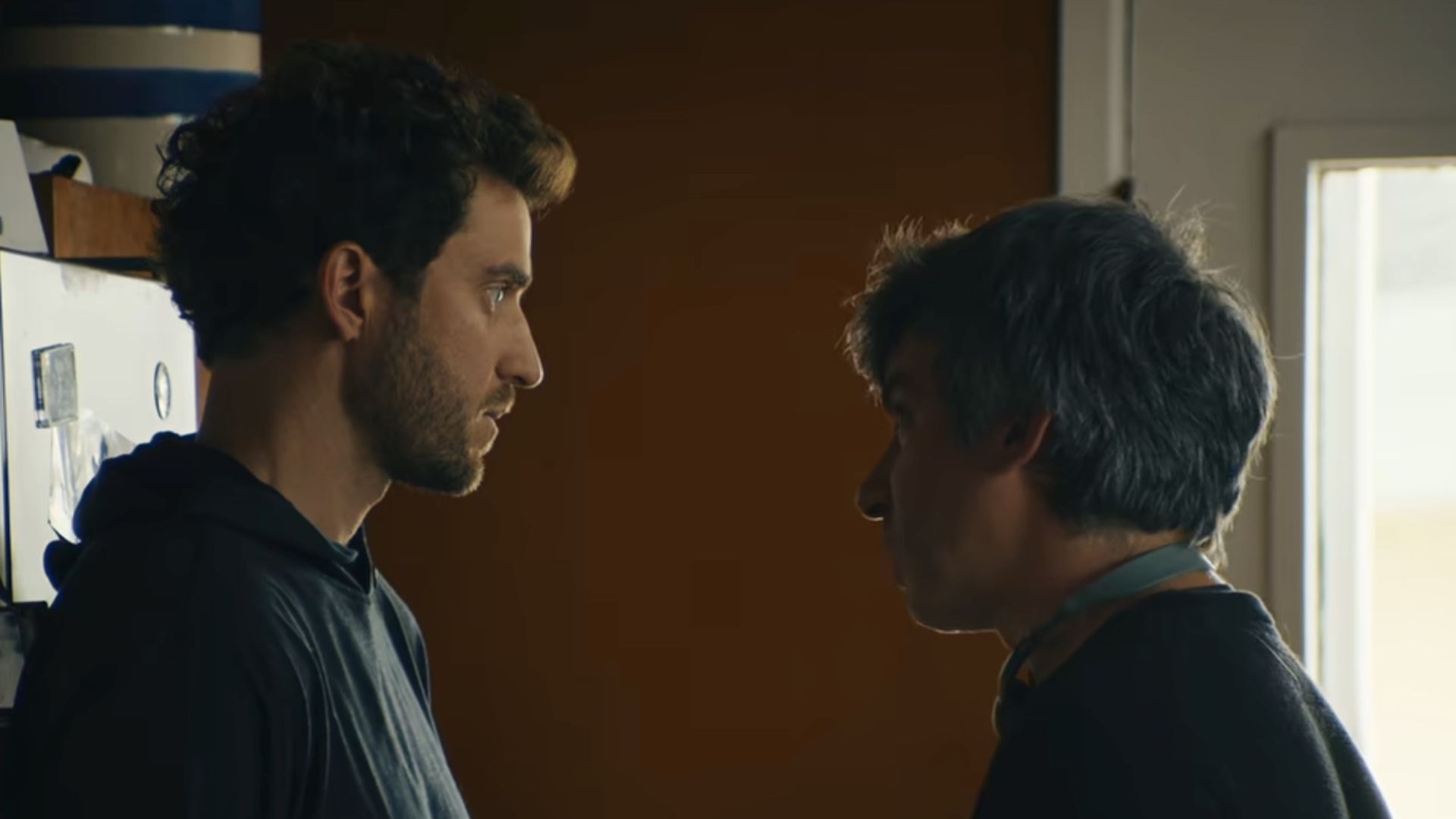
The name You Can See Everything means different things for the hit A24 release from directors Nathan Fielder and Lance Oppenheim. The surprise hit of the 2026 movie schedule is still tearing up the box office in its second week, and it’s getting talked about around the water cooler (or, you know, Reddit and X or whatever the new water cooler is). One meaning is that you can literally see everything, including Elizabeth Holmes’ partner in the shower. And not just from the waist up. It turns out that scene was Evans’ idea.
We can’t talk about everything we saw without some SPOILERS, so be warned: there are spoilers below!
Evans’ Shower Scene Didn’t Come From Fielder
If you’ve seen the movie, you know what I’m talking about. There is a scene with Billy Evans taking a shower where we not only see him in all his glory, but the camera lingers for a bit on his private parts. A wider-angle shot shows Nathan Fielder filming the scene, and he turns the camera and gives a sly smile.
For a movie that is a character study (or, really, an examination of what “truth” is), do we need the shot? It’s quite startling, to say the least. Even more surprising is that the directors didn’t have to convince Evans to do it, he volunteered. Co-director Lance Oppenheim explained how it came about in an interview with GQ:
We were in the car ride on the way back from the gym and I said to Billy, ‘We will give you some time to shower.’ And Billy responded, ‘Want to film me showering?’ I offered to film him in a way that could avoid seeing his genitals, but Billy said he didn’t care about being seen naked.
Naked he was! As to why Billy offered to shoot the scene, that is more a matter of opinion. It’s not like the scene was crucial to the story, although it does give the name of the movie one more meaning, that’s for sure. As to why, Oppenheim himself isn’t sure, but he opined:
I don’t know what that means, but I feel like there’s enough stuff in there that gives me the impression that maybe he was excited that people could see everything and that there was full access, I guess. But it really beats me, honestly.
It beats me too. I could go into an in-depth opinion on Evans as a person, but all I know about him, pretty much, is what I “learned” from You Can See Everything, so that’s not fair. I can say that in a movie full of WTF moments, this has been one of the most talked-about. It’s not as consequential as when Holmes and Evans lay out the Theranos machine and discuss the meaning of “can” and “could” with Fielder, but it’s certainly as startling to a viewer.


