Amateur psychologists across the internet are still trying to make sense of everything they saw in You Can See Everything. The box office hit has been the talk of the 2026 movie schedule this fall, with audiences weighing in on former Theranos founder Elizabeth Holmes, and the discussion is all over the place, from former co-workers to Holmes’ partner, Billy Evans. Recently, an outlet even sat down with three actual psychologists to get their opinions on what they see (and don’t see) in the Nathan Fielder/Lance Oppenheim-directed film.
As the Boston Globe makes clear, these are the psychologists’ opinions, though they have never treated Holmes or Evans. Still, the comments are insightful and fascinating. If you’ve seen the movie, you know that “truth” is at the core of the questions being asked by it. Is Holmes lying? Is Evans? Is Fielder? Dr. Matt Jerram, a psychologist at Boston Neuropsychological Services, addressed that:
I still didn’t walk away feeling confident one way or the other whether she lied about everything or not. But I did walk away feeling confident that there was a portrayal of her that was different in each spot. So whether what she was doing in this documentary was the real her versus just another portrayal, it doesn’t matter necessarily. But it was really striking how different the identities were. You have this high-powered woman who’s going to be CEO of the year, and then you have the person who, at least the story is, can’t stand up for herself in any relationship, right?
There is a striking difference between Holmes at the height of her acclaim, before the house of cards collapsed and she was sent to prison for fraud, and the Holmes we meet in the movie. One of the major differences we see is in her relationship with Evans, as Dr. Jerram mentioned. Dr. Kristina Pinto, another psychologist at Boston Neuropsychological Services, also talked about that:
Relationships are so centrally implicated in personality disorders. What raises the specter of a personality disorder here is just how her identity and personality shift by relationship.The whole scene where she says she’s never lied once, and it’s like, oh well, that’s an interesting personality trait. And then by the end of the movie, she’s saying, ‘Now I don’t have to pretend with Billy, I don’t have to pretend here.’ So this is someone who’s saying to us an hour and a half ago, ‘I don’t lie,’ and then by the end she, at least in the retelling, she’s acknowledging that she has had to pretend.
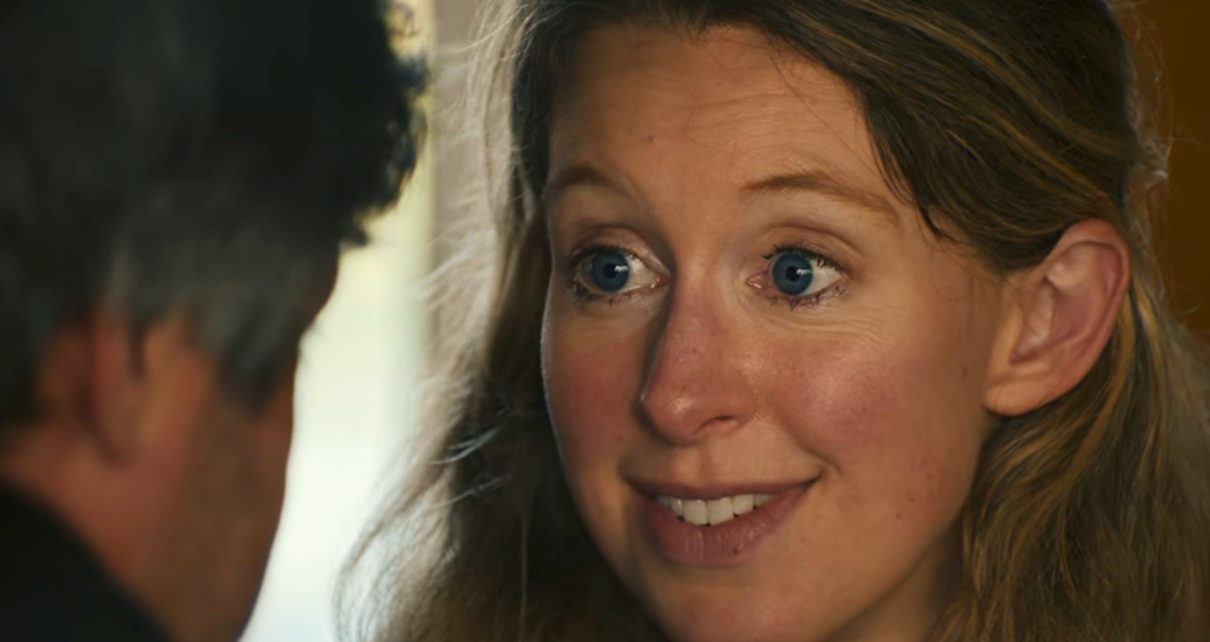
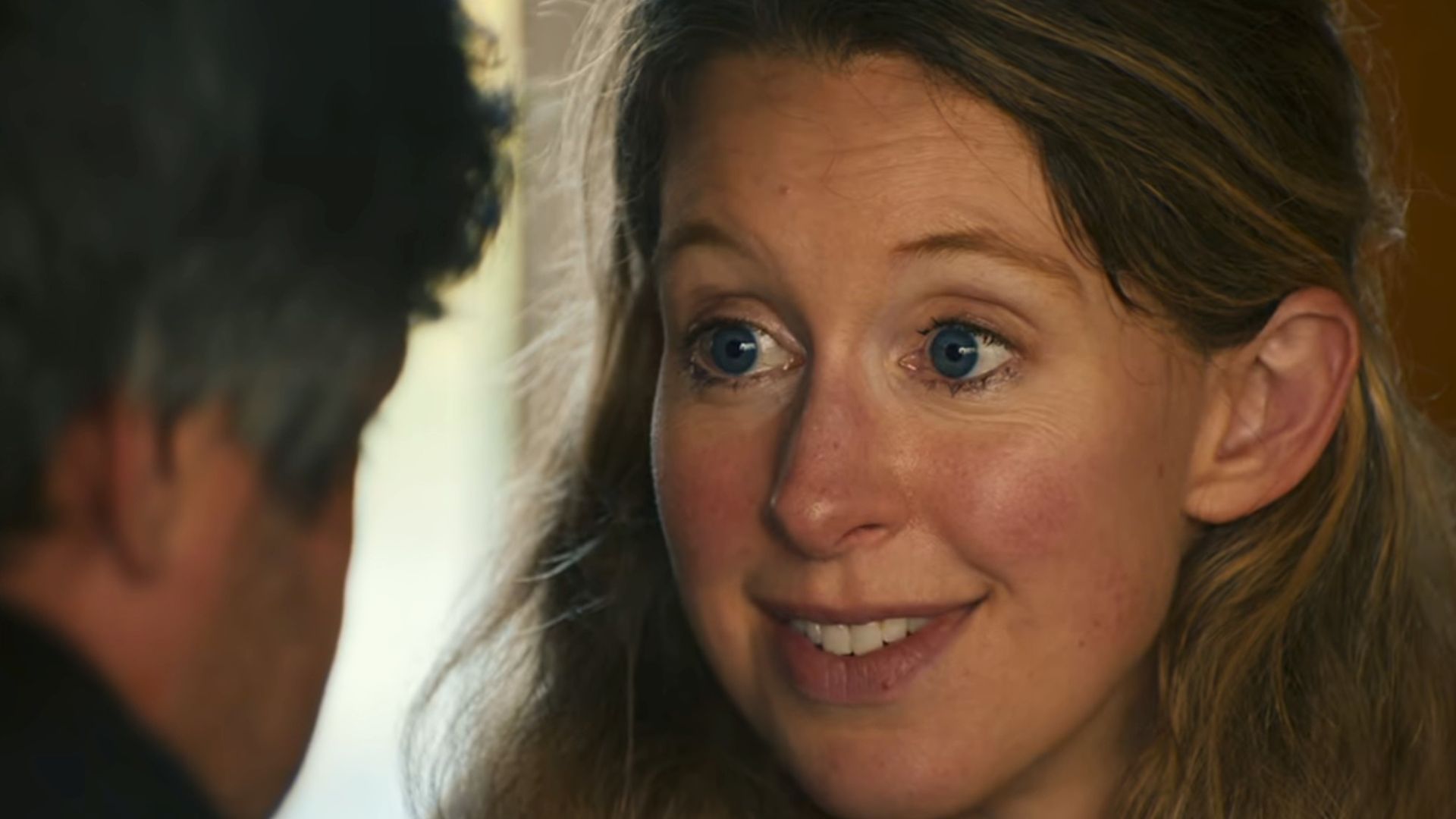
In a movie that never lets audiences get concrete answers (one of the most brilliant things about this Oscar contender), these things brought up by the psychologists only dig deeper into my bewilderment. That befuddlement is, in large part, due to Holmes, of course. And some of that comes from her unblinking stare that everyone has become so familiar with.
Dr. Jerram told the paper:
Her eyes were always wide open. Her whole facial expression would tend to draw in people who want to be sympathetic to her. It was kind of childlike in a lot of ways.
Dr. Alice Connors-Kellgren, a psychologist and director of psychology and psychology training at Tufts Medical Center, expanded on that:
I found myself really not connecting with her very much, or having a lot of empathy or sympathy for her. I think because it felt like she got the childlike, ‘I’m gonna pull you in,’ and then she went way too far with it.
So, we’re still left with what and who to believe in You Can See Everything, and we’re also left contemplating just who Elizabeth Holmes is. Is she the master manipulator she was convicted by a court of being, or is she the one being manipulated due to an undiagnosed neurodivergence, as the scene watching “Who’s On First?” tries to argue? Dr. Jerram’s thoughts are interesting:
My feeling was either she is a tremendous actress or, you know, she has actually got some stuff going on. I would want to know a lot more before I drew a final conclusion. I would definitely say she clearly has some difficulty understanding subtext and understanding, say, you know, simile, metaphor, those types of cognition.
So the debate will rage on in the public square, probably at least until the Oscars in March. I’m all for continuing it, because it’s one of the most fascinating films I’ve ever seen. The more I think about it, the better it gets.