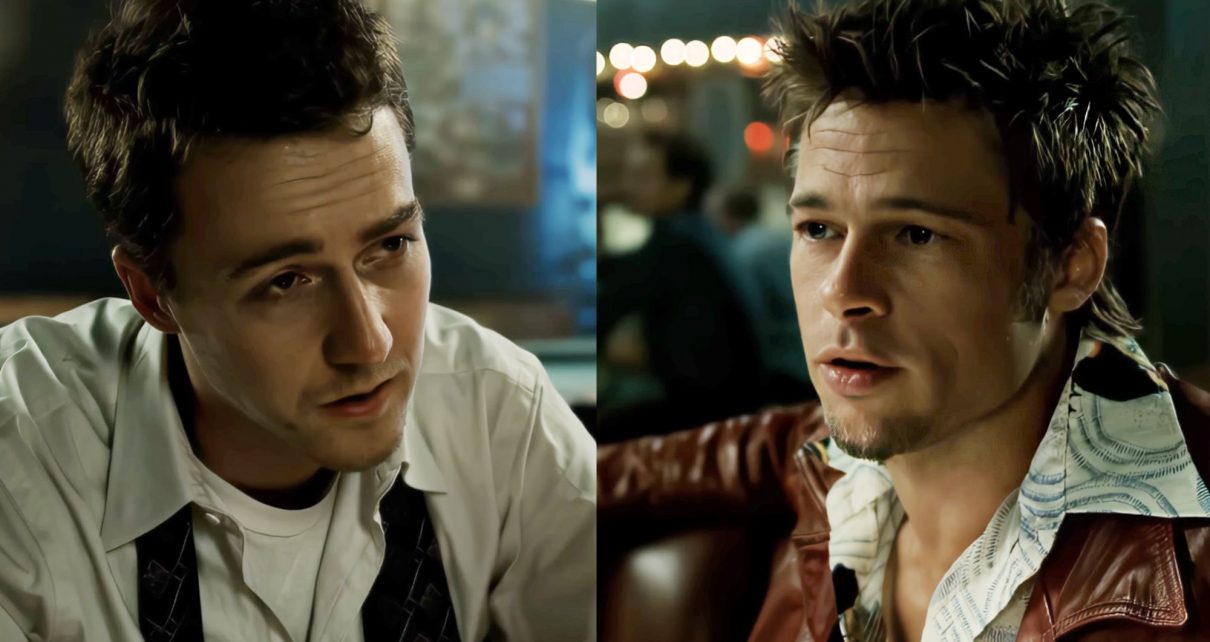
It is strange now to remember that Fight Club, one of the best movies of the 1990s, was not always a beloved entry in lists of David Fincher’s best films. The movie has become one of those titles people talk about as if it arrived fully formed as a cult classic, but according to Edward Norton, the very first wave of audience reactions was a whole lot rougher, and Brad Pitt apparently saw the storm clouds coming, too.
Norton told the story during an appearance on the Fly on the Wall with Dana Carvey and David Spade, where he looked back on Fight Club’s rocky early reception. The actor reminded the hosts that people sometimes forget the movie was a box-office disappointment before it found its audience. He also recalled the movie’s Venice Film Festival premiere, which sounds like exactly the wrong room for Fincher’s bruising, anti-consumerist fever dream. Norton explained:
I remember they made a very strange decision to premiere that movie at the Venice Film Festival, which didn’t feel like a good fit with subtitles and all these things. And it got booed…. And at the hotel beforehand, Brad had said to me… He kind of pulled me aside and said, ‘How do you think this is gonna go?’ And I said, ‘I don’t think this is gonna go well at all.’ And he said, ‘Me neither. Let’s get stoned. And he had flown in private, so he had a big joint. We kind of stood in the back of this hotel, and I’m like a lightweight, and Brad, at the time, was a pro.
That is such an incredible mental image. Two of the stars of what would become one of the most quoted movies pre-the new millennium, standing behind a hotel before a major festival premiere, looking at each other and realizing the whole thing might be about to crash into the marble floor.
Honestly, I get why they were worried. Fight Club is not exactly a polite festival movie. It is loud, nasty, funny, angry and deeply uncomfortable by design. It is a movie where the satire keeps biting, and if you drop that into the wrong room, with the wrong expectations, you are basically asking for a poor reception. If someone in that crowd actually thought they were their effing khakis, their mind must have been blown.
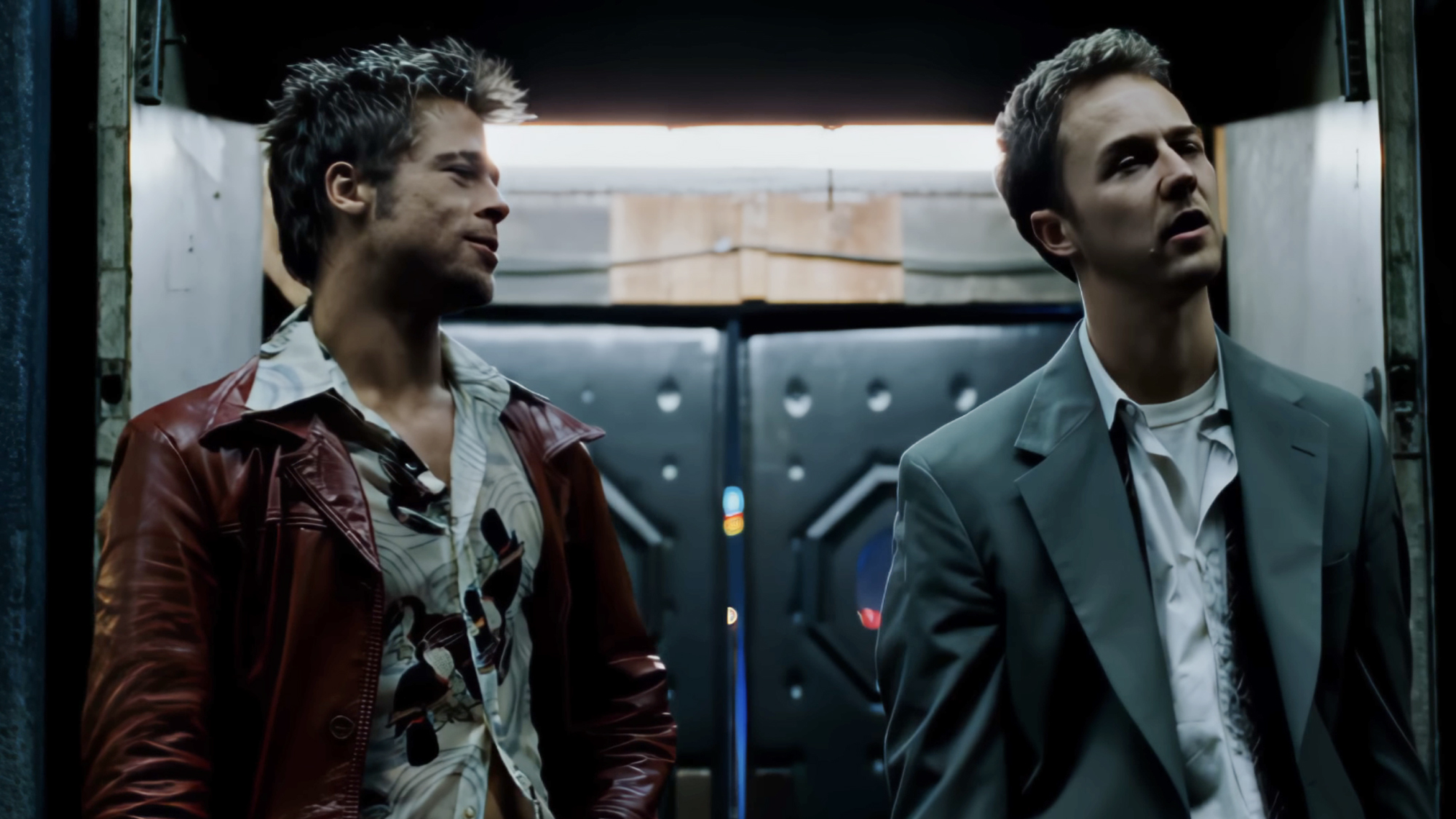
The funny thing is, Norton’s story makes the failure sound almost inevitable in hindsight. Not because the movie was bad, obviously. Time has handled that argument pretty well. But because Fight Club was never built to be easily received. It was built to irritate, provoke and make people laugh at things they maybe did not want to laugh at. That can age into cult status beautifully. It can also make a first screening feel like a public punishment.
According to Norton, the audience response was not subtle. He continued:
I remember sitting in the back and watching the movie and people were actively booing. They booed at the end, and people left in the middle of it. And Brad turned to me in the dark at the end of it, kind of tearful, and he said, ‘I think that’s the best movie I’m ever gonna be in.’
Plenty of popular ’90s movies have not stood the test of time, but Norton’s story says a lot about why Fight Club has. Some movies need time to find the people who speak their strange little language. Fincher’s film did not become what it is because everyone understood it right away. It became many folks’ favorite of his work because, once it finally found the right audience, that audience would not shut up about it.
All these years later, Norton’s account makes the movie’s disastrous premiere feel like part of the legend. Of course Fight Club got booed. Of course people walked out. Of course Brad Pitt still knew. And despite all that, it remains one of my, and many other cinephiles’, favorite page-to-screen adaptations, even if plenty of film bros still miss the point, and nearly 30 years after its release, we are still talking about it.